
Middle-Power Diplomacy in an Age of Great-Power Rivalry
The states caught between giants are not passive. Their hedging is a strategy in its own right — and it may shape the century as much as the giants do.
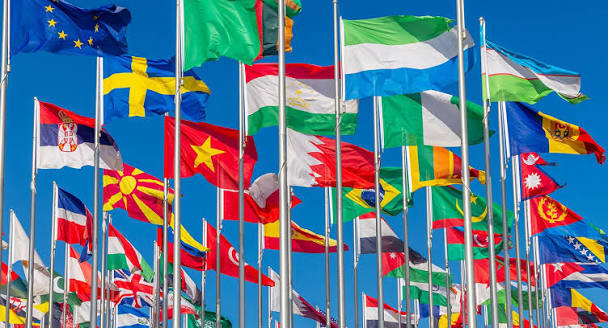
When great powers compete, attention gravitates to the giants and their capabilities. But the outcome of a rivalry is often decided by the states in the middle — economies large enough to matter, but not large enough to dictate — and by the choices they make about whom to align with and how far. Their leverage comes precisely from their refusal to be captured.
These are the states that host the bases, supply the components, cast the swing votes and lend the legitimacy that great-power projects require. Individually, none can alter the balance; collectively, they set the terms on which the giants must operate. A superpower can coerce a middle power, but it cannot coerce all of them at once without driving them into one another's arms. That collective bargaining power is easy for the giants to underestimate and expensive for them to ignore, and the shrewdest middle powers have learned to make their cooperation with one another the price of their cooperation with anyone else.
Hedging as a doctrine
A middle power that commits fully to one camp forfeits its bargaining position; a middle power that keeps its options open remains courted by both. Hedging is often mistaken for weakness or opportunism, but it is a deliberate strategy for maximising autonomy in a system where alignment is expensive and irreversible commitments are dangerous.
The skill lies in calibration — deepening ties with one power in the domains where it offers the most, while preserving room for manoeuvre in the domains where the other does. Done well, it turns geographic vulnerability into diplomatic value.
The limits of the balancing act
Hedging is not costless, and it is not always available. A crisis can collapse the space between the giants and force a choice that years of careful ambiguity were designed to avoid. States that have banked their strategy on never having to decide can find the decision made for them, by an invasion or an embargo or an ultimatum.
The most successful middle powers therefore invest in the sources of genuine independence — defensible economies, credible militaries, dense institutional memberships — so that when the moment of choice arrives, they choose from a position of strength rather than submitting from one of weakness.
Coalitions of the unaligned
Increasingly, middle powers are discovering that they have more leverage together than apart. On trade rules, technology standards, climate finance and the governance of new domains, coalitions of the unaligned can shape outcomes that neither superpower can simply impose.
This is the quiet story of contemporary diplomacy: a diffusion of agency away from the two largest capitals toward a broader set of players who decline to see the world as a binary contest.
Institutions as force multipliers
The most effective middle powers amplify their weight by embedding themselves in the rules and bodies that govern international life. A state that helps write a standard, chair a negotiation or broker a compromise acquires an influence its raw capabilities would never command. Institutional skill is the great equaliser between the large and the merely significant.
This is patient, unglamorous work — the accumulation of trust, expertise and procedural memory that lets a smaller state punch above its weight when it matters. It cannot be improvised in a crisis; it is built over years of showing up, and it is precisely the capacity that the giants, for all their power, often lack the patience to cultivate.
The century will be narrated as a great-power rivalry. It may be decided, in the aggregate, by the thousands of smaller decisions made in the capitals that refuse to pick a side — and by whether the giants prove wise enough to court them rather than corner them.
Ali
Editor of Diplomatic Oak, writing on geopolitics, foreign policy and the craft of diplomacy.